Plate Heat Exchangers for Food and Beverage
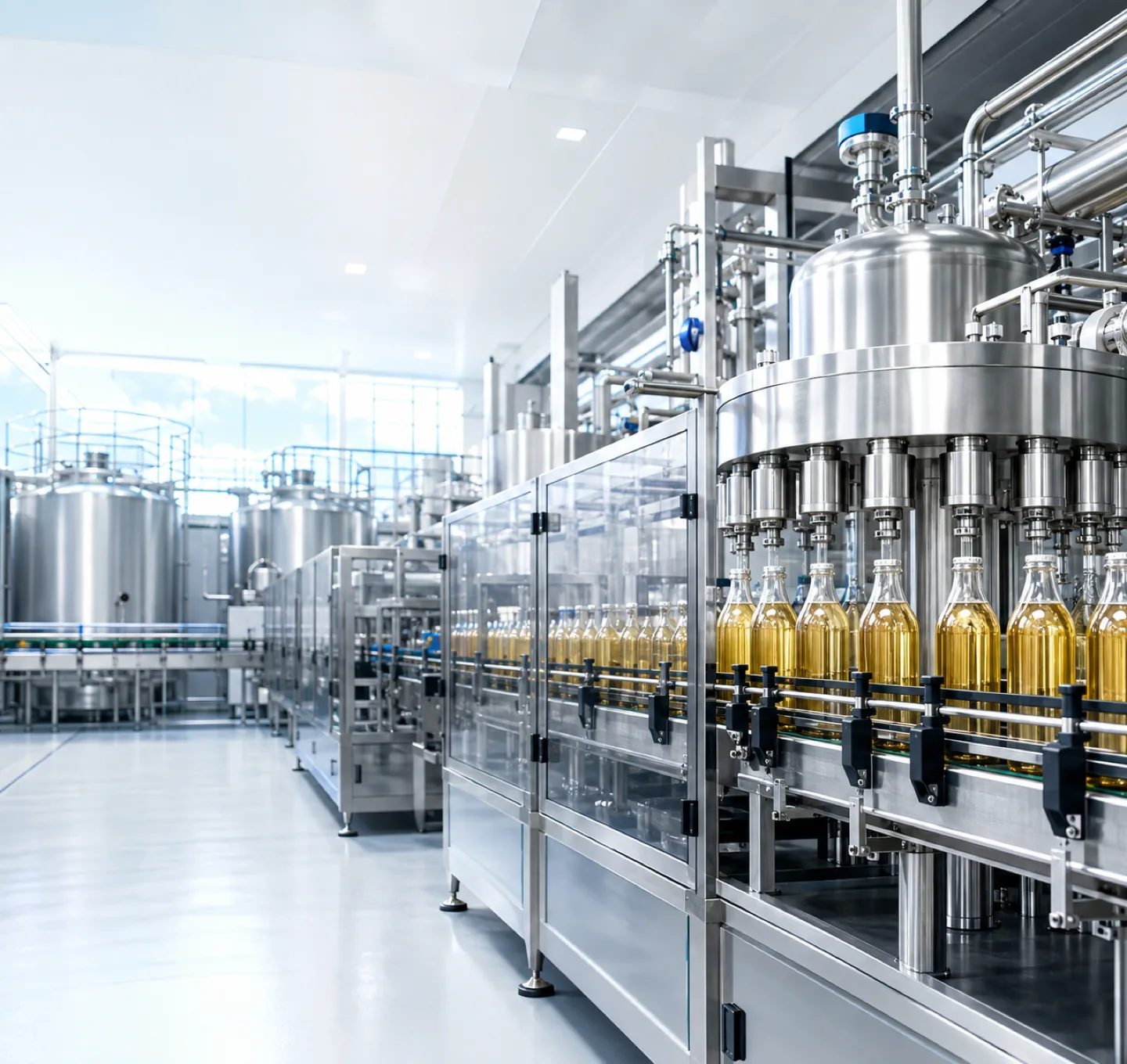
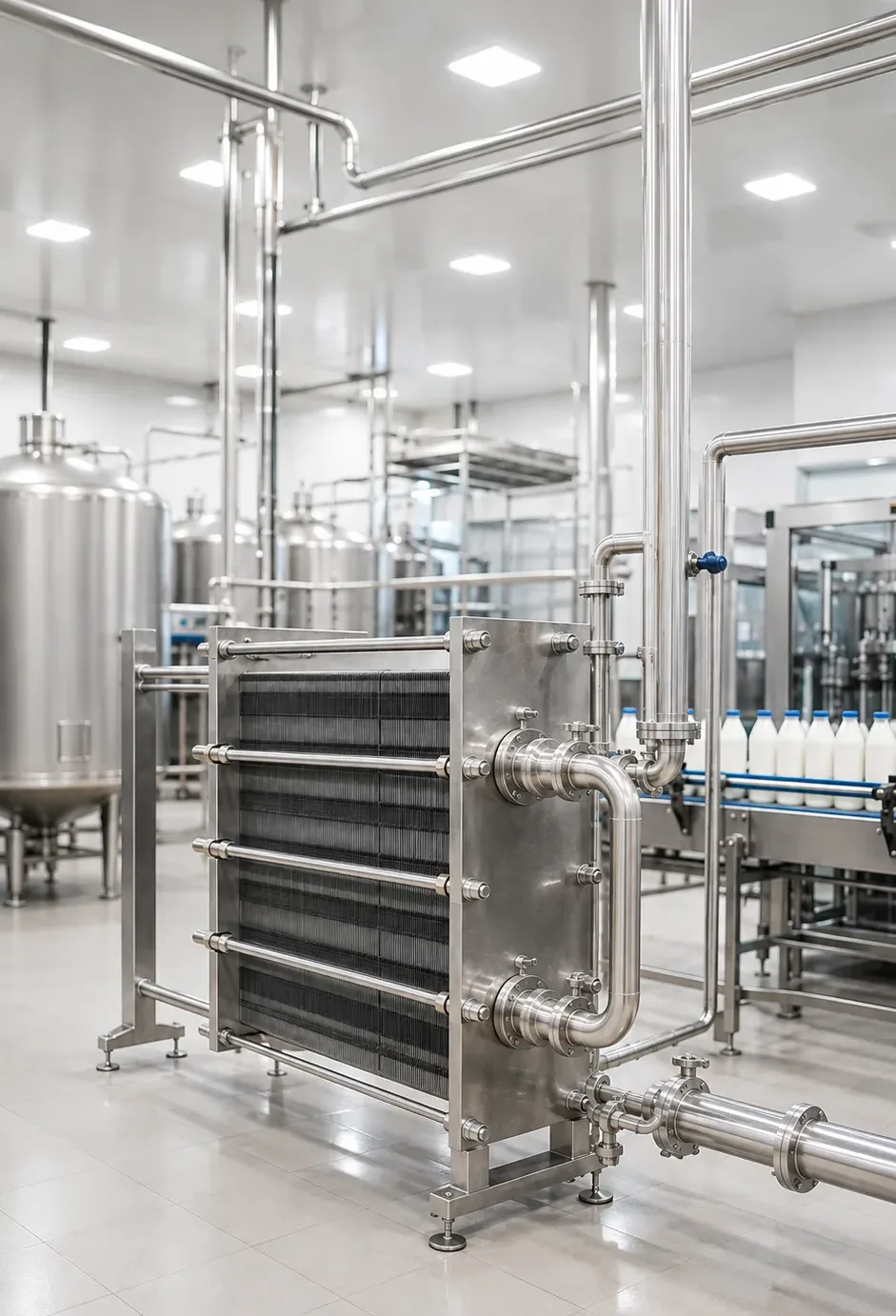
Aiprel supplies plate heat exchangers for dairy, beverage, brewing, sugar, edible oil and fermentation processes, including heating, cooling and pasteurization.

Aiprel Heat Exchanger Solutions
Gasketed Plate Heat Exchangers
Gasketed plate heat exchangers are suitable for many food and beverage heating, cooling and heat recovery duties. The removable plate pack allows access to individual plates for inspection and mechanical cleaning.The heat transfer area can be adjusted by changing the number of plates within the allowable frame capacity.
Multisection Plate Heat Exchangers
A multisection unit performs several thermal stages within a single frame. In a pasteurization system, one section may recover heat, another heats the product to the required process temperature and a third cools it before filling or storage.This configuration reduces piping, installation space and the number of separate heat exchangers.
Wide-Channel Plate Heat Exchangers
Wide-channel plate heat exchangers are designed for products containing pulp, fibers, suspended solids or higher-viscosity ingredients. Larger flow passages help reduce blockage risk and make the equipment more suitable for products that cannot pass reliably through narrow conventional channels.
What Should You Consider When Selecting a Plate Heat Exchanger for Food and Beverage Processing?

Product Properties
Viscosity, density, specific heat, thermal conductivity and solids content directly affect heat exchanger performance. Product data should be provided at the actual processing temperature rather than at room temperature alone.
Hygienic Requirements
Product-contact materials, surface condition, connection design and gasket formulation should be selected according to the applicable hygiene and food-contact requirements of the destination market.Any required FDA, EU, 3-A or other food-contact documentation must be specified and confirmed during quotation rather than assumed from the standard industrial configuration.
Fouling Risk
Milk proteins, sugar, pulp, fats and other ingredients may form deposits on heat transfer surfaces. Appropriate wall temperature, flow velocity, channel gap and cleaning frequency help control fouling.
Product Particles
Products containing pulp, fibers or suspended solids may require larger plate gaps or wide-channel designs. Maximum particle size and concentration should be provided before selection.
Pressure Drop
The exchanger must provide sufficient product flow without excessive pressure loss. This is especially important for viscous products and fluids whose texture can be affected by high shear.
Cleaning-in-Place
CIP temperature, chemical concentration, cleaning time and flow rate should be evaluated together with the plate and gasket materials. The cleaning procedure must remove product deposits without damaging the exchanger.
Related Products
Semi-Welded Plate Heat Exchanger
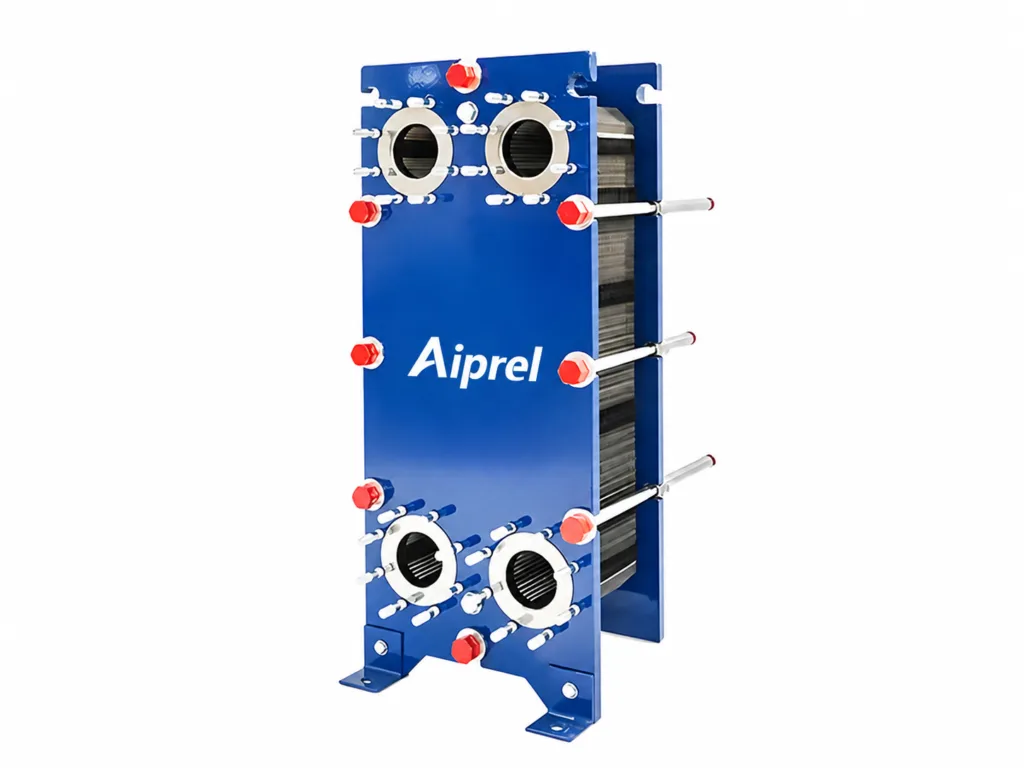
The Aiprel semi-welded plate heat exchanger combines the serviceability of a gasketed plate-and-frame unit with the enhanced sealing of welded plate cassettes. It is designed for processes where one medium is corrosive, hazardous, at an elevated temperature or otherwise difficult to contain with a conventional fully gasketed plate pack.
Gasketed Plate Heat Exchanger
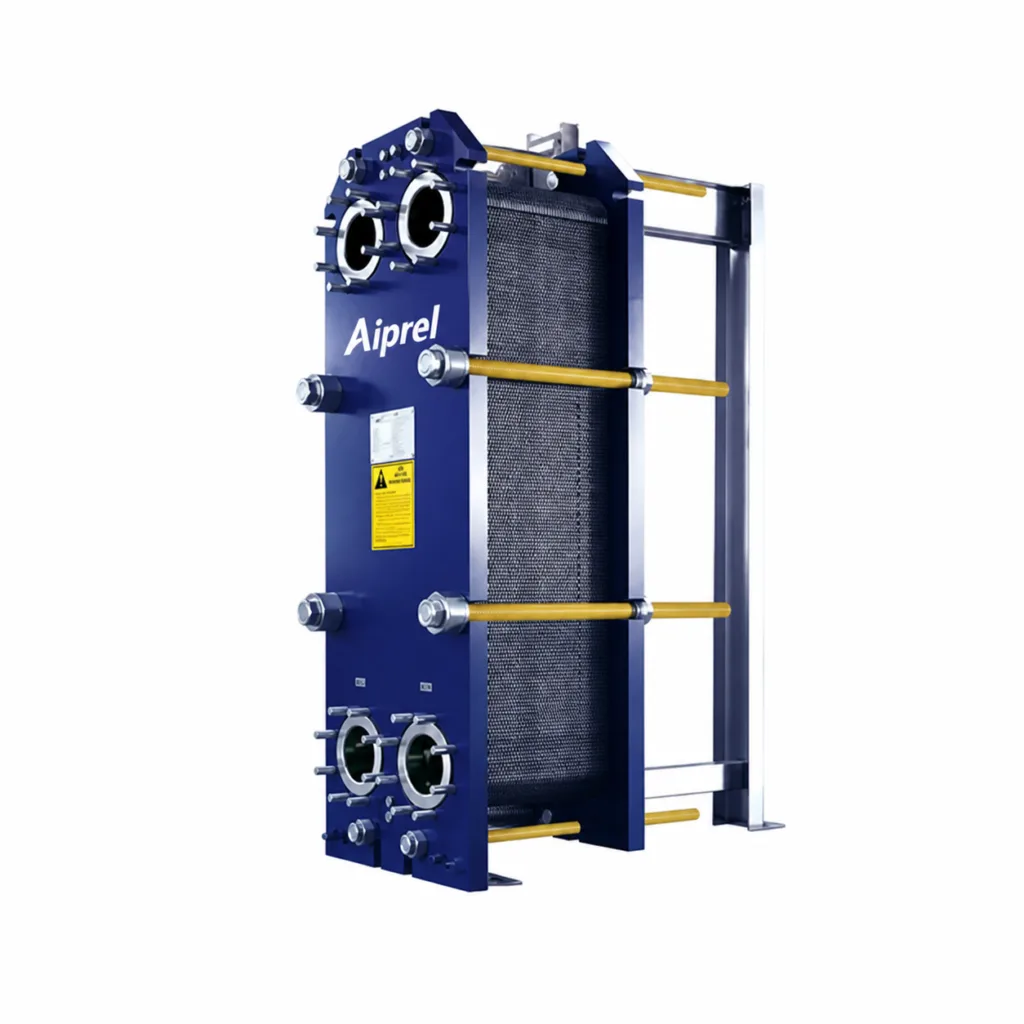
Aiprel gasketed plate heat exchangers deliver efficient heat transfer, compact construction, flexible capacity and easy cleaning for industrial applications.
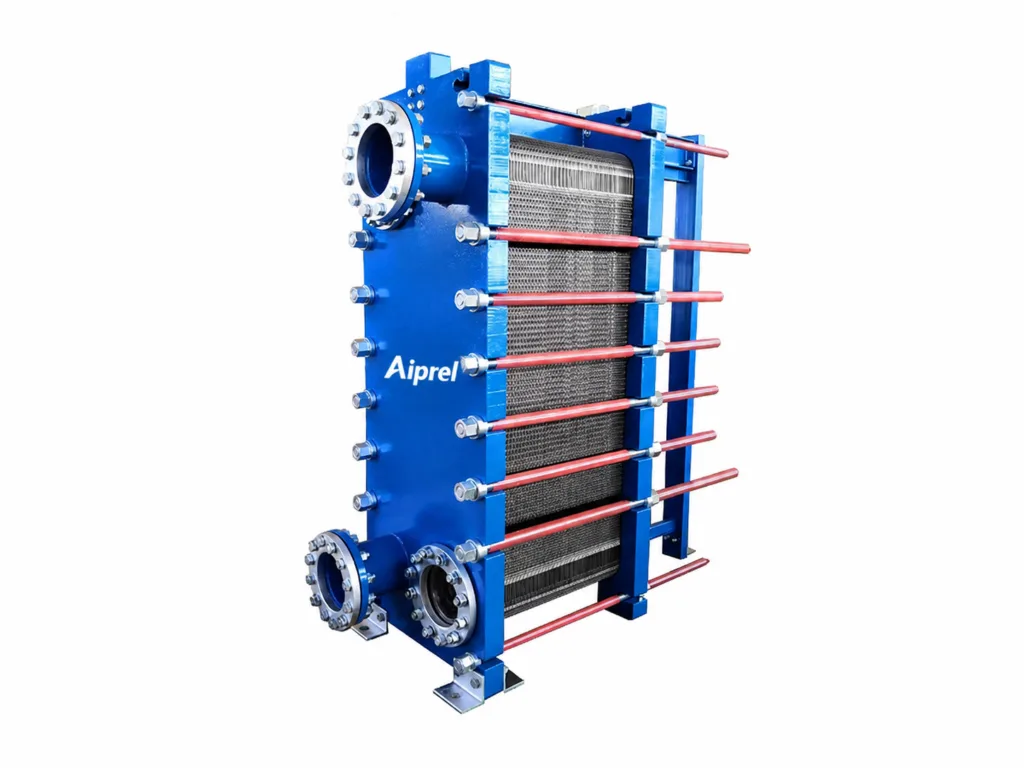
Plate Condenser
Plate condenser is an indirect heat exchanger that converts vapor into liquid by transferring latent heat to a cooling medium through corrugated metal plates.
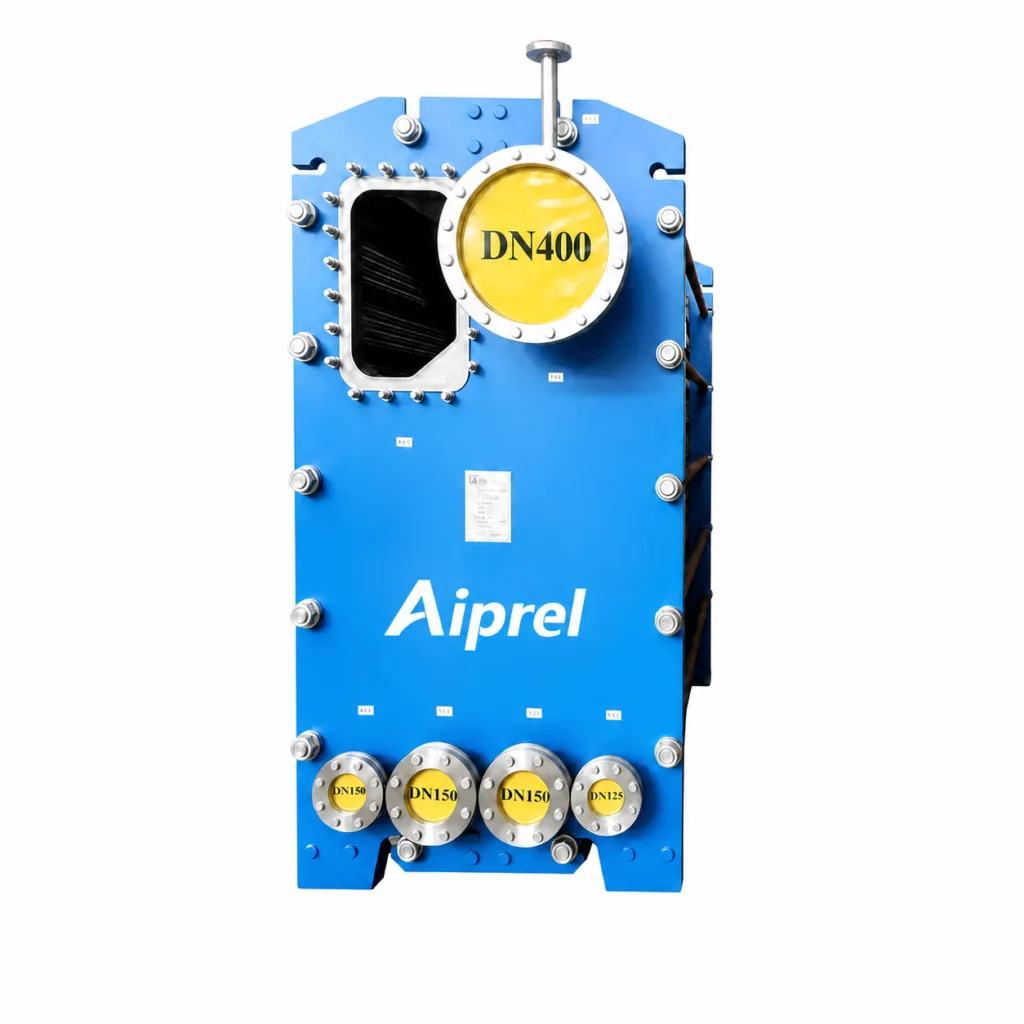
Plate Evaporator
Plate evaporators are especially effective for free-flowing liquids with low to moderate viscosity and relatively uniform boiling behavior.They may also be used for selected higher-concentration products, provided that the final viscosity and fouling characteristics remain compatible with the plate channel design.