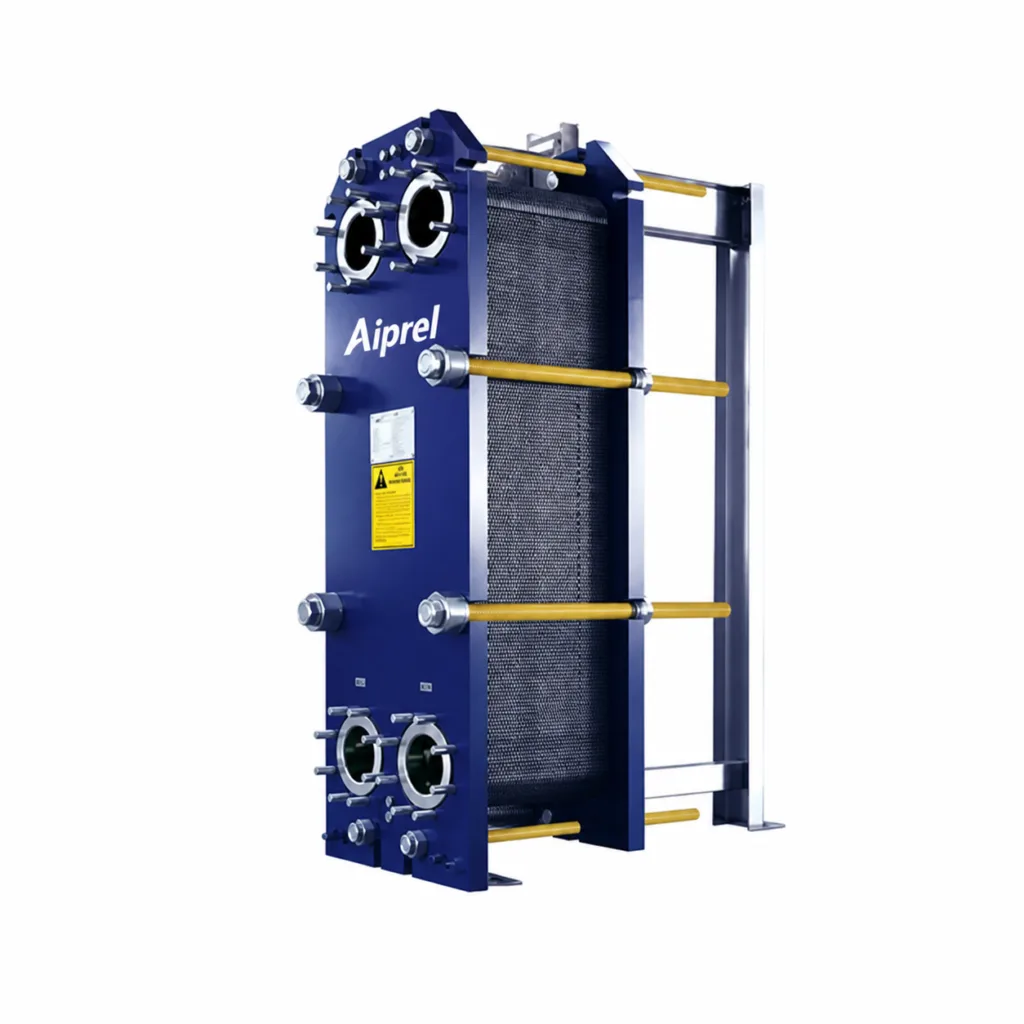
Fully Welded Plate Frame Heat Exchanger

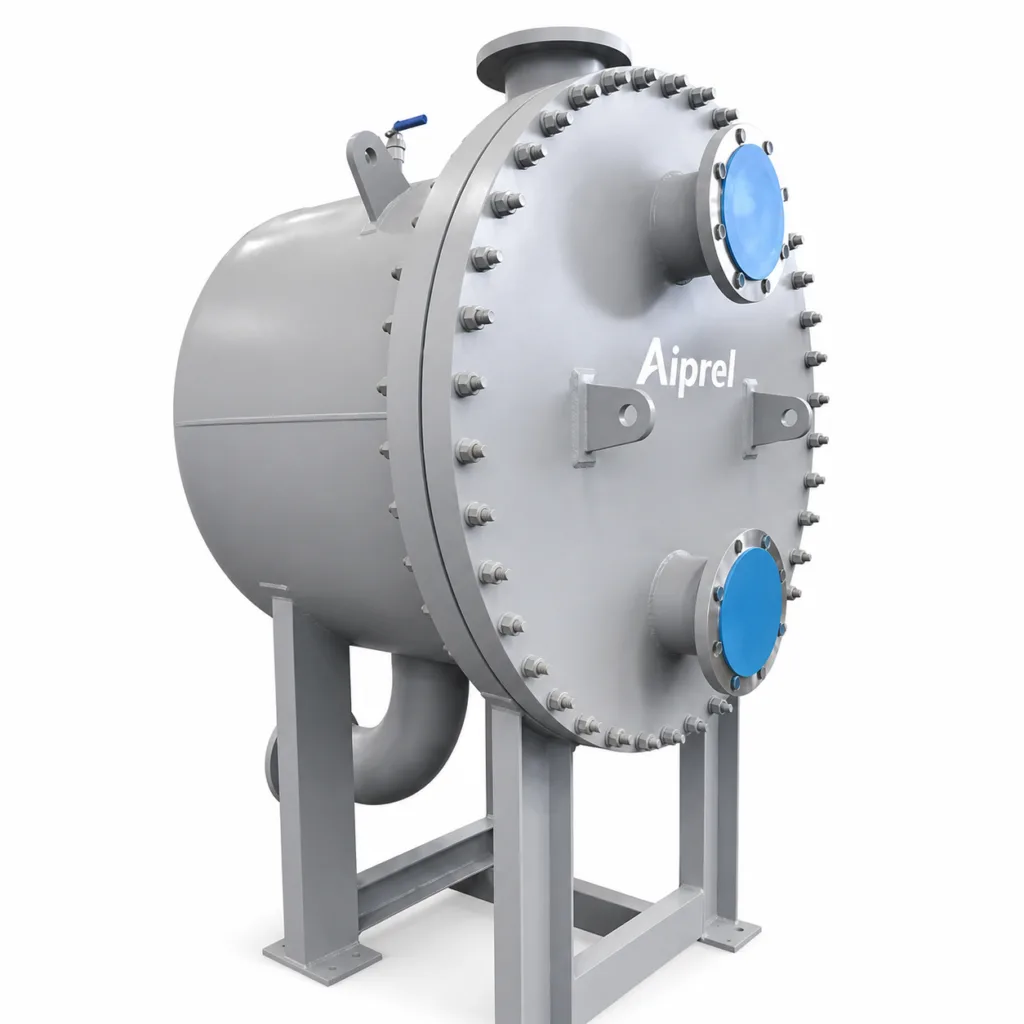
Aiprel fully welded plate-and-frame heat exchangers deliver efficient heat transfer under high-temperature, high-pressure and corrosive process conditions.

Inquiry Now

Description

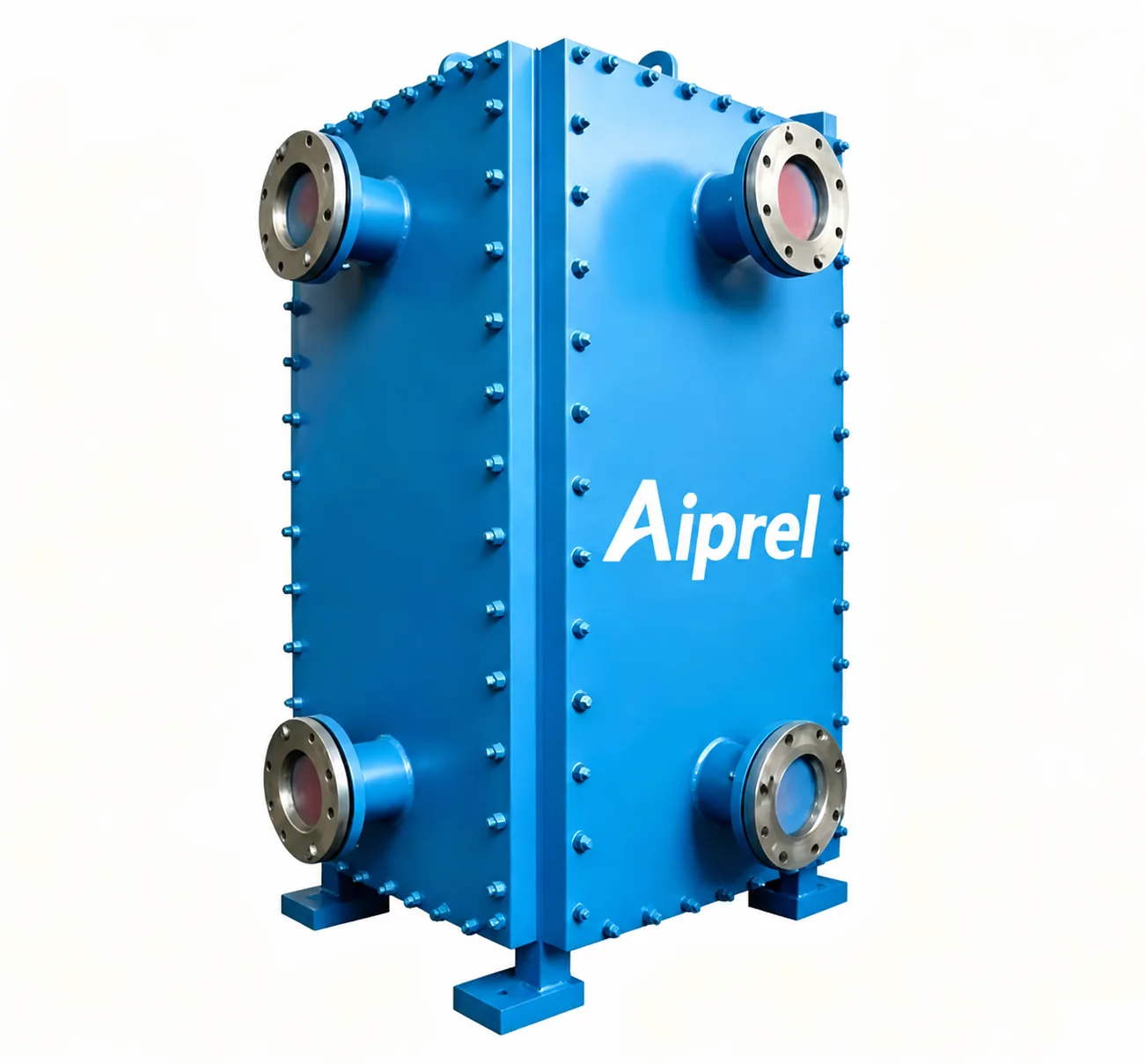
The Aiprel fully welded plate-and-frame heat exchanger combines the compact size and high thermal efficiency of plate technology with the durability of a welded construction. Instead of using elastomer gaskets between the heat transfer plates, the plates are welded together to form a sealed heat exchange core.This construction makes the fully welded plate heat exchanger suitable for applications involving elevated temperatures, higher pressures, aggressive chemicals, oils, gases and process vapors. It is widely used in chemical processing, petrochemical production, oil and gas, power generation, pharmaceutical manufacturing, marine engineering and industrial heat recovery.

Main Advantages

Designed for High-Temperature and High-Pressure Service

The gasket-free welded construction eliminates the temperature and pressure limitations associated with elastomer seals. Aiprel's published specifications list a **maximum design temperature of 350°C** and a **maximum design pressure of 35 bar**, subject to the selected model, materials and project design. This operating capability makes the fully welded plate heat exchanger suitable for duties above the normal range of many removable gasketed plate-and-frame units. Typical examples include high-temperature oil cooling, steam condensation and thermal processes in the chemical and energy industries.

Gasket-Free All-Metal Sealing

The heat transfer plates are permanently joined to form a welded plate pack. With no elastomer gaskets between the process channels, the design avoids gasket hardening, swelling and chemical degradation. The welded sealing arrangement reduces potential leakage paths and supports reliable containment in demanding service. This is particularly valuable when processing high-temperature fluids, aggressive chemicals or media that are incompatible with conventional gasket compounds.

Material Options for Corrosive Media

Aiprel lists plate material options including: - AISI 304 stainless steel - AISI 316 and 316L stainless steel - AISI 904L stainless steel - Titanium - Hastelloy - Nickel - 254 SMO These options allow the heat transfer surface to be matched to different process media. Titanium and specialty nickel alloys may be considered for selected corrosive environments where conventional stainless steel is unsuitable. Corrosion resistance always depends on the complete fluid composition, concentration, temperature and operating conditions. Final material selection should therefore be confirmed through an application-specific compatibility review.

Efficient Counter-Current Heat Transfer

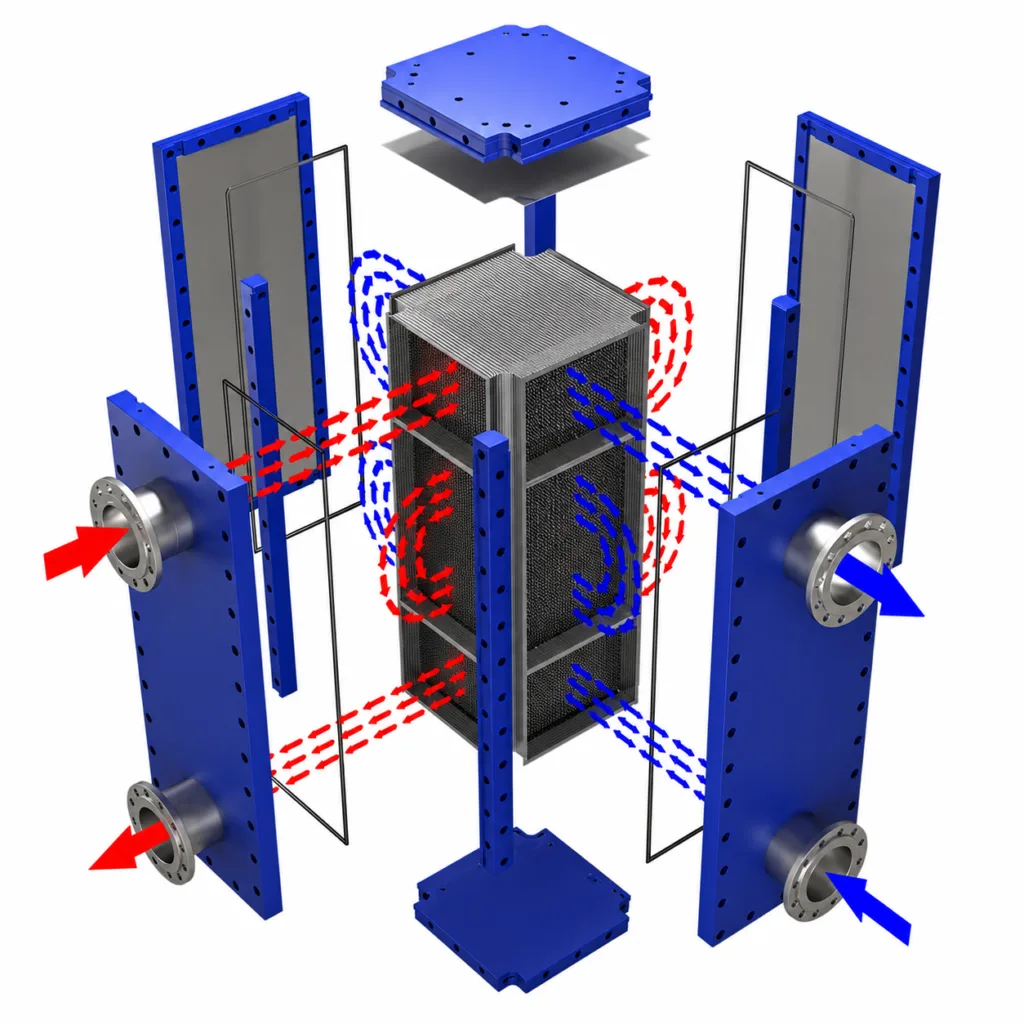
Hot and cold media travel through alternating welded plate channels. The corrugated plate pattern promotes fluid turbulence and increases the effective heat transfer surface, while a counter-current arrangement maintains a useful temperature difference along the plate pack. Aiprel states that its welded plate-and-frame design can provide substantially higher heat transfer performance than a conventional shell-and-tube exchanger for suitable duties. This can reduce the heat transfer area and equipment volume required for a given process. Actual performance depends on the fluid properties, flow rates, temperature program, plate pattern, fouling allowance and allowable pressure drop.

Compact Industrial Design

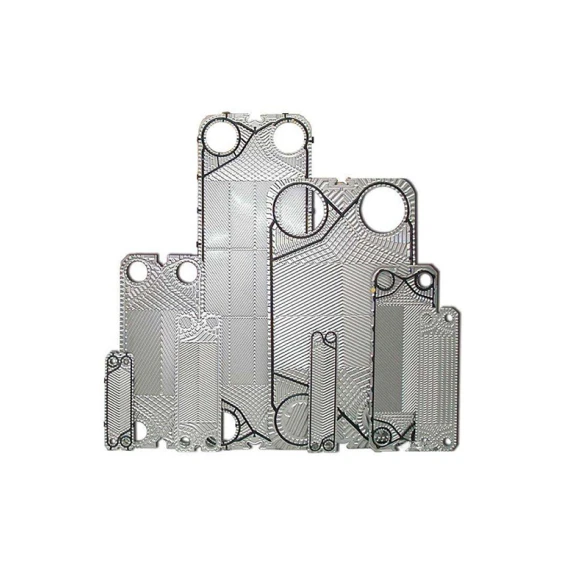
Thin corrugated plates provide a high concentration of heat transfer surface within a relatively small equipment volume. This gives the fully welded plate heat exchanger a compact footprint compared with many traditional tubular solutions. The reduced space requirement can be valuable in process skids, refinery upgrades, power plants, steel mills and other facilities where installation area is limited. Lower equipment weight may also simplify layout and structural planning, depending on the selected configuration.

Rigid Mechanical Construction

The welded plate pack provides a robust all-metal structure for industrial operation. The surrounding pressure-retaining components support the plate pack and provide the required inlet and outlet connections. Aiprel identifies three configurations according to application requirements:- Non-removable construction - One-side-removable construction - Fully removable construction This range allows the exchanger design to reflect the required balance between containment, inspection access and cleaning.

Cleaning Options for Different Process Conditions

Cleaning requirements should be considered when selecting the exchanger configuration. Chemical cleaning can be used when deposits can be safely dissolved without damaging the selected metals. Where the chosen construction provides access to the plate pack, mechanical cleaning may also be possible. A removable or partially removable configuration can therefore offer maintenance advantages for fluids that foul or form deposits. Cleaning access is model-dependent. It should be confirmed in Aiprel's final drawing rather than assumed for every fully welded design.

Long Operating Intervals Without Gasket Replacement

Because the welded plate pack contains no channel gaskets, it does not require routine gasket replacement. This can extend maintenance intervals and reduce shutdown work associated with gasket inspection, regasketing and plate-pack compression. Equipment service life is not stated as a fixed number of years because it depends on corrosion, erosion, fouling, thermal cycling, operating practices and maintenance. Correct material selection and operation within the approved design limits are essential for long-term reliability.

Specification

Operating Temperature
−195°C to 538°C, without elastomer gasket limitations
Design Pressure
Full vacuum to 8.2 MPa, compared with typically ≤2.5 MPa for conventional BR models
Heat Transfer Coefficient
,000–6,000 W/m²·K, approximately 3–5 times that of a shell-and-tube heat exchanger
Heat Transfer Area per Unit
Up to 6,000 m², suitable for large-capacity industrial applications
Connection Size
DN25–DN300, with flanged, welded or threaded connections available
Maximum Processing Capacity
Up to 2,500 m³/h
Plate Materials
AISI 304, AISI 316, AISI 316L, titanium, Hastelloy, nickel and 254SMO

Application

The combination of gasket-free construction, compact heat transfer surfaces and a broad choice of plate materials makes fully welded plate heat exchangers suitable for demanding industrial applications.

Oil, Gas and Petrochemical Processing

Fully welded plate heat exchangers can be used for process heating and cooling, high-temperature oil cooling, steam condensation and heat recovery. The gasket-free plate pack is valuable where hydrocarbons, solvents or elevated temperatures may be unsuitable for elastomer seals.

 Chemical and Inorganic Chemical Processing

Applications include heating, cooling and heat recovery involving acids, alkalis and other aggressive media. Stainless steel, titanium or specialty alloy plates can be selected according to the chemical composition and operating temperature.

Coke Oven Gas and Related Chemical Processes

Aiprel identifies coke oven gas chemical processing as an application area for welded plate-and-frame heat exchangers. The compact welded construction can support heating, cooling and energy-recovery duties within these process systems.

Energy and Power Generation

Potential duties include process-water cooling, oil cooling, steam-related heat recovery and auxiliary thermal systems. Aiprel also lists nuclear power among its application areas. Each project must be evaluated against its required design standard, safety class and operating conditions.

Metallurgy and Steel Production

Fully welded plate heat exchangers can serve high-temperature cooling and heat-recovery duties in metallurgical and steel plants, including cooling-water and lubricating-oil circuits where process conditions require a welded design.

Pharmaceutical Processing

The welded plate pack may be selected for process heating, cooling or condensation where gasket compatibility is a concern. Material selection, surface requirements, cleanability and applicable hygienic standards must be specified for each pharmaceutical project.

Pulp and Paper

Typical uses include process-fluid heating and cooling, heat recovery and utility duties. Fluid solids, fibers and fouling behavior should be reviewed when determining plate geometry and cleaning access.

Special Corrosive and Low-Temperature Duties

With an appropriate plate material and mechanical design, welded plate heat exchangers may be considered for seawater, acidic or alkaline media and selected low-temperature processes. These applications require project-specific verification of materials, welding procedures and design limits.

Get In Touch With Us

Need pricing? Need samples? Need support? Talk with our team in 24h.

Call Us

Available 8am–8pm
(Mon–Sun)
+86 0523-85121161

Email Us

We respond to all inquiries within 24hours.
julie@aiprel.com

Contact Form

*We strictly protect your information.

Request A Quote

Quote