Plate Heat Exchangers for HVAC
Aiprel plate heat exchanger for HVAC transfers thermal energy between two separate fluid loops without allowing the fluids to mix during normal operation. Hot and cold media pass through alternating channels formed by corrugated metal plates. Heat moves rapidly through the thin plate walls, while each circuit can retain its own pressure, flow rate and water-treatment conditions.

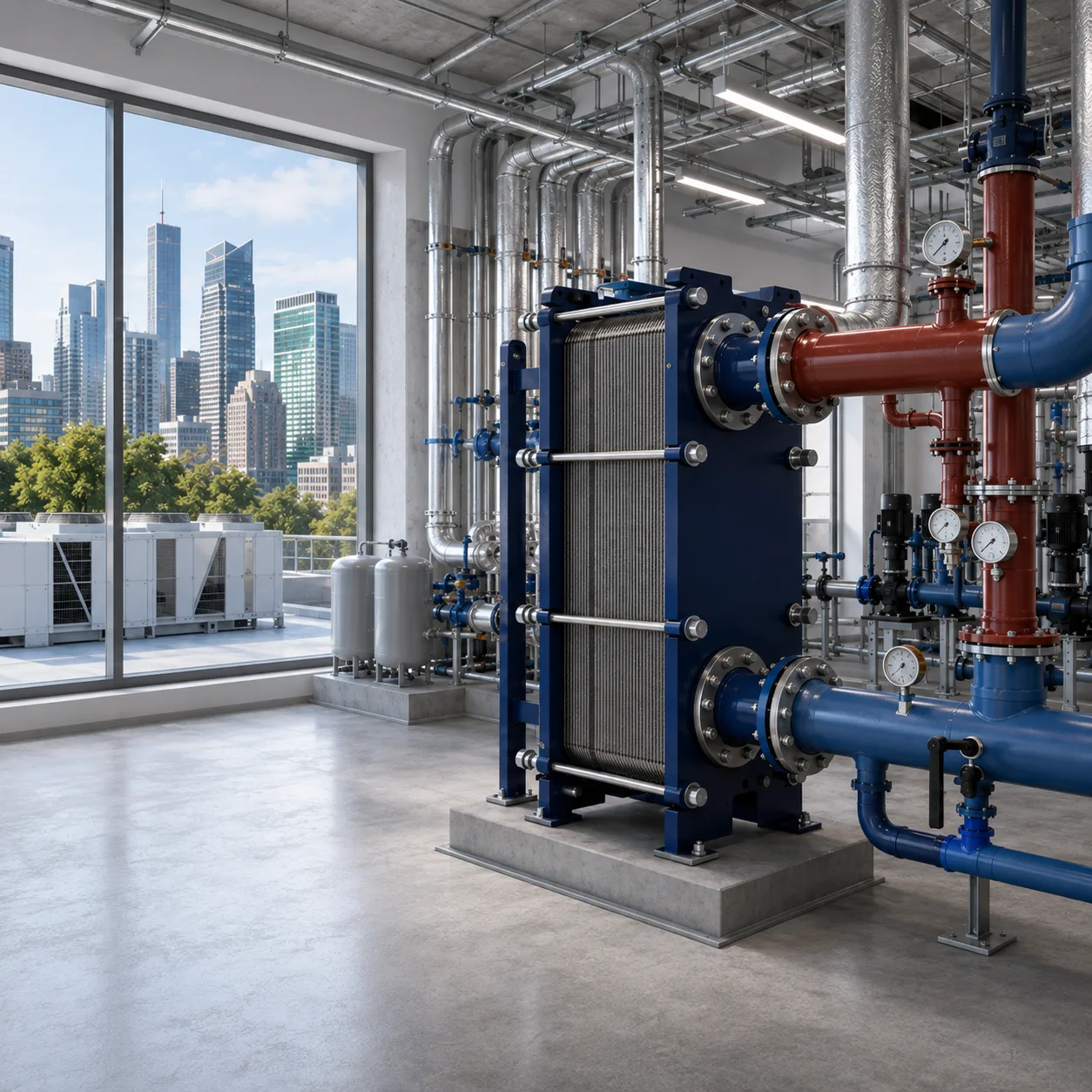
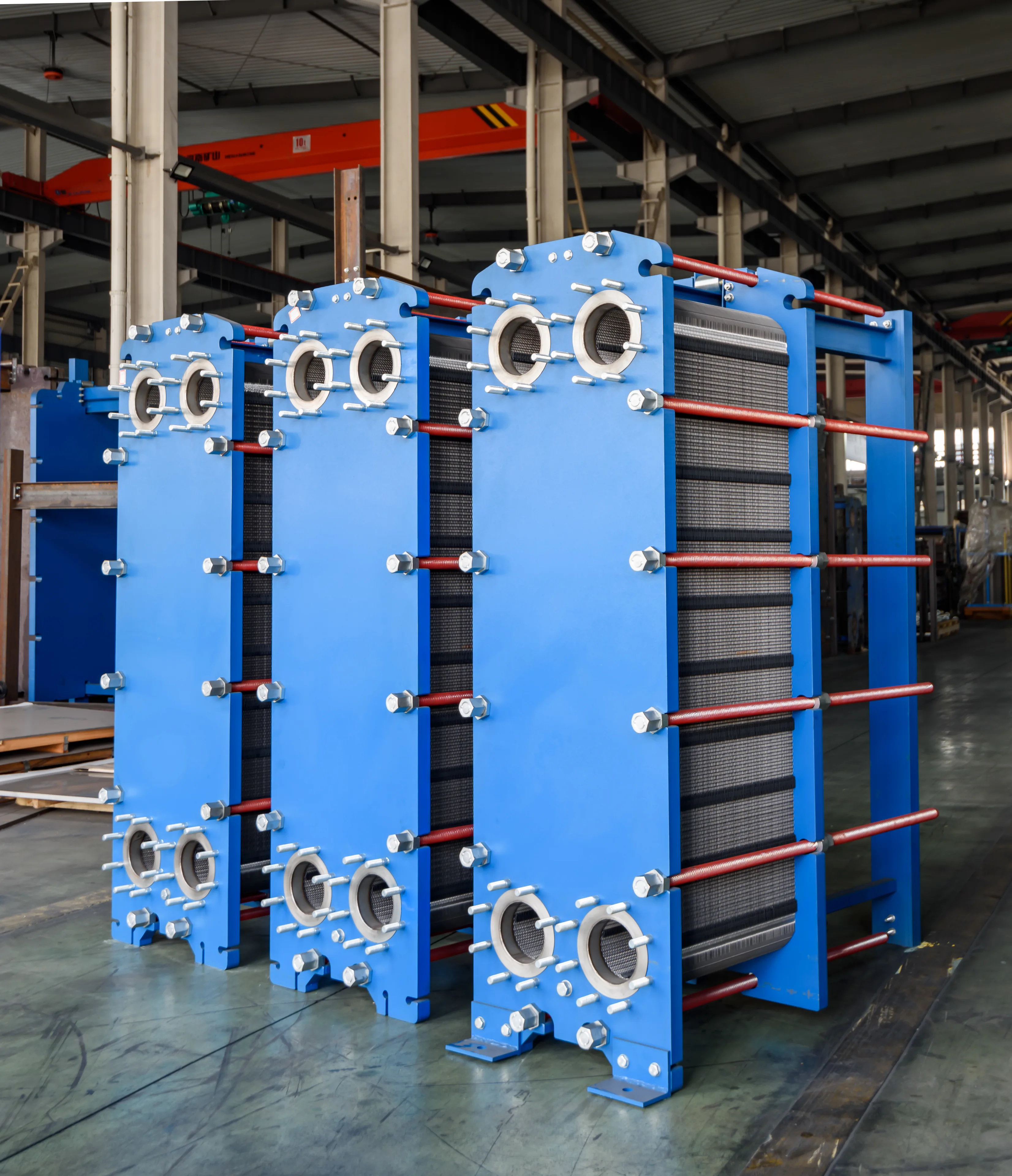
Aiprel Heat Exchanger Options for HVAC
Gasketed Plate Heat Exchangers
Gasketed plate-and-frame units are well suited to many district heating, district cooling, hydronic separation and heat-recovery applications. Their openable construction supports inspection, cleaning and plate-pack adjustment.
Aiprel's published gasketed range includes:
- APU, APN and APM series
- Connection sizes from DN32 to DN500
- Maximum published design flow of 4,500 m³/h
- Maximum published heat load of 60 MW
- Maximum published design pressure of 3.5 MPa
- Published plate thicknesses of 0.4, 0.5, 0.6 and 0.7 mm
- Multiple plate and gasket material options
These values describe the overall range and may not be available together in a single model. Final specifications must follow the project calculation and approved product drawing.
HVAC Applications for Plate Heat Exchangers

District Heating
Plate heat exchangers transfer heat from district networks to building heating and domestic hot-water systems while keeping the primary and secondary circuits separate.
District Cooling
They connect central chilled-water networks with individual buildings, providing efficient cooling alongside hydraulic and pressure separation.
Commercial Building Hydronic Separation
Plate heat exchangers isolate different pressure zones, boiler circuits and chilled-water loops, protecting equipment and simplifying system control.
Heat Pump Systems
They connect heat pumps with source-water, building-water or heat-recovery circuits while maintaining separate fluid conditions on each side.
HVAC Heat Recovery
Plate heat exchangers recover usable energy from condenser water, process cooling water and other waste-heat sources for space heating or water preheating.
Geothermal Heating and Cooling
They separate geothermal wells or ground loops from building HVAC systems, helping protect equipment from minerals, sediment and unsuitable water chemistry.
Solar Thermal Heating
Plate heat exchangers transfer solar energy to domestic hot-water, space-heating or thermal-storage circuits while keeping glycol inside the collector loop.
Boiler Circuit Isolation
They protect boilers from contaminated or oxygen-rich distribution water while transferring heat efficiently to radiators, underfloor heating and air-handling systems.
Related Products
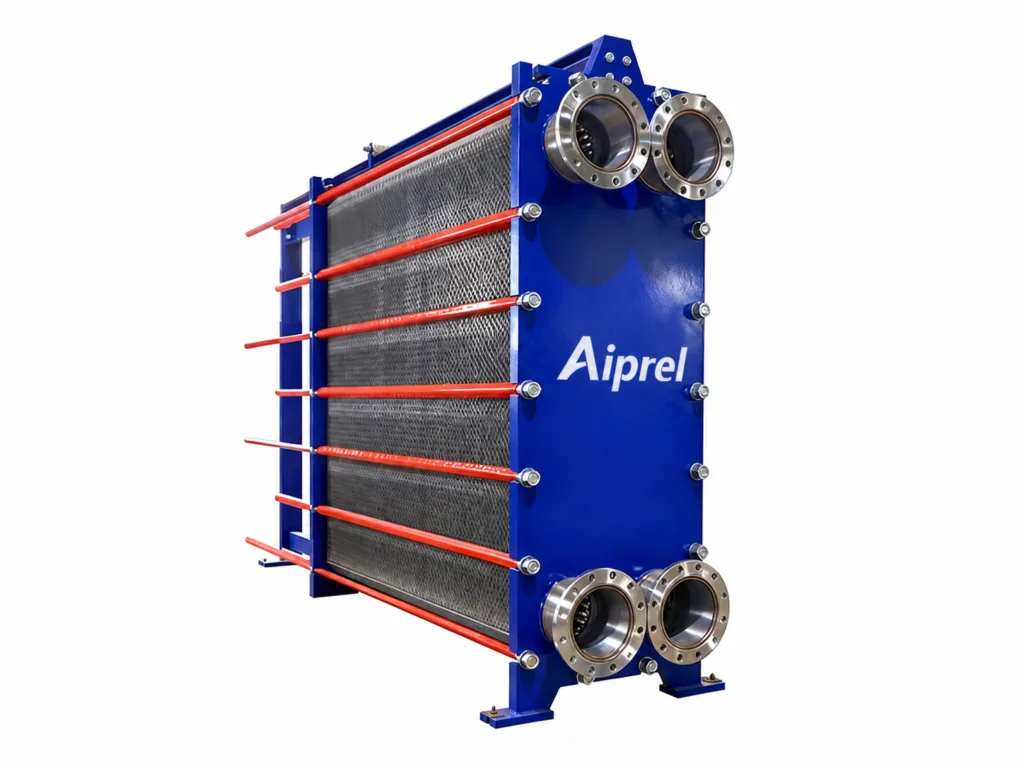
Wide-Gap Plate Heat Exchanger
Wide-Gap plate heat exchanger is a removable plate-and-frame heat exchanger with larger plate spacing and specially designed flow passages.
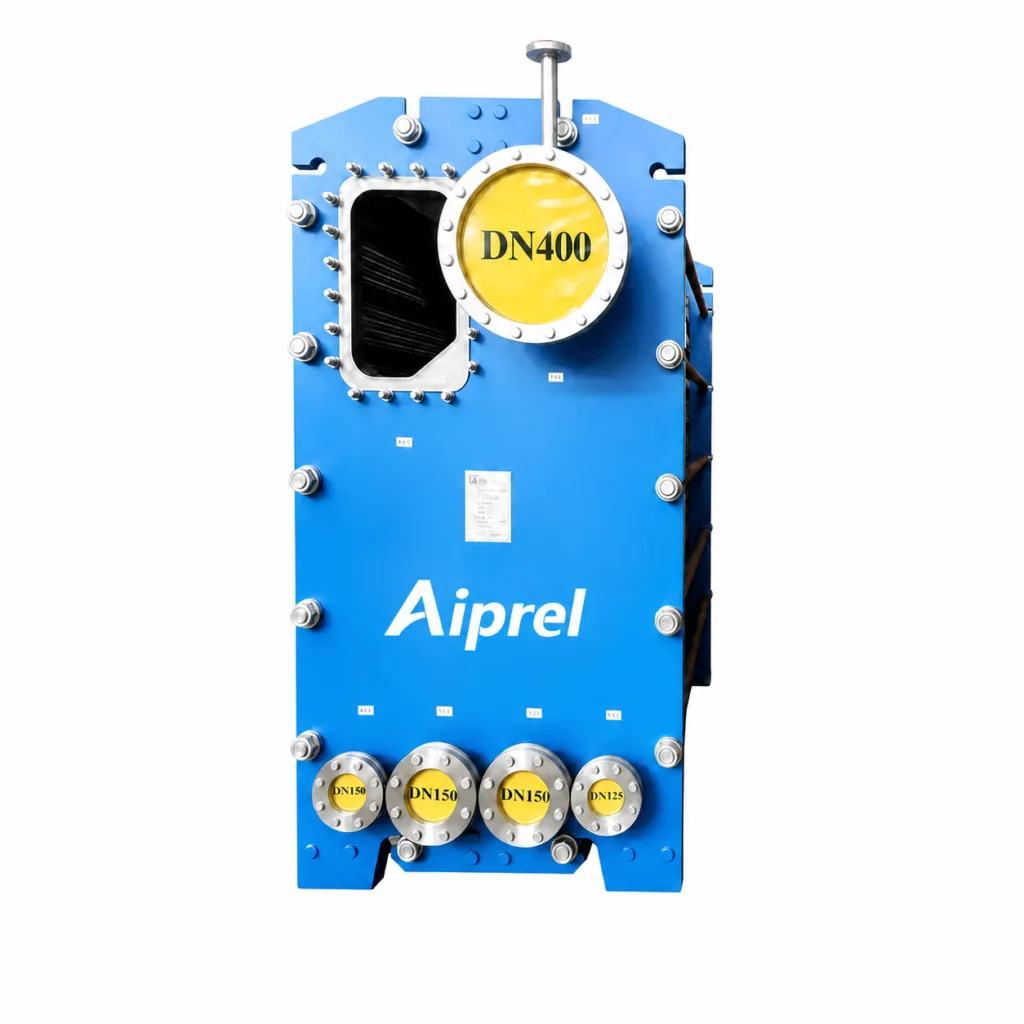
Plate Evaporator
Plate evaporators are especially effective for free-flowing liquids with low to moderate viscosity and relatively uniform boiling behavior.They may also be used for selected higher-concentration products, provided that the final viscosity and fouling characteristics remain compatible with the plate channel design.
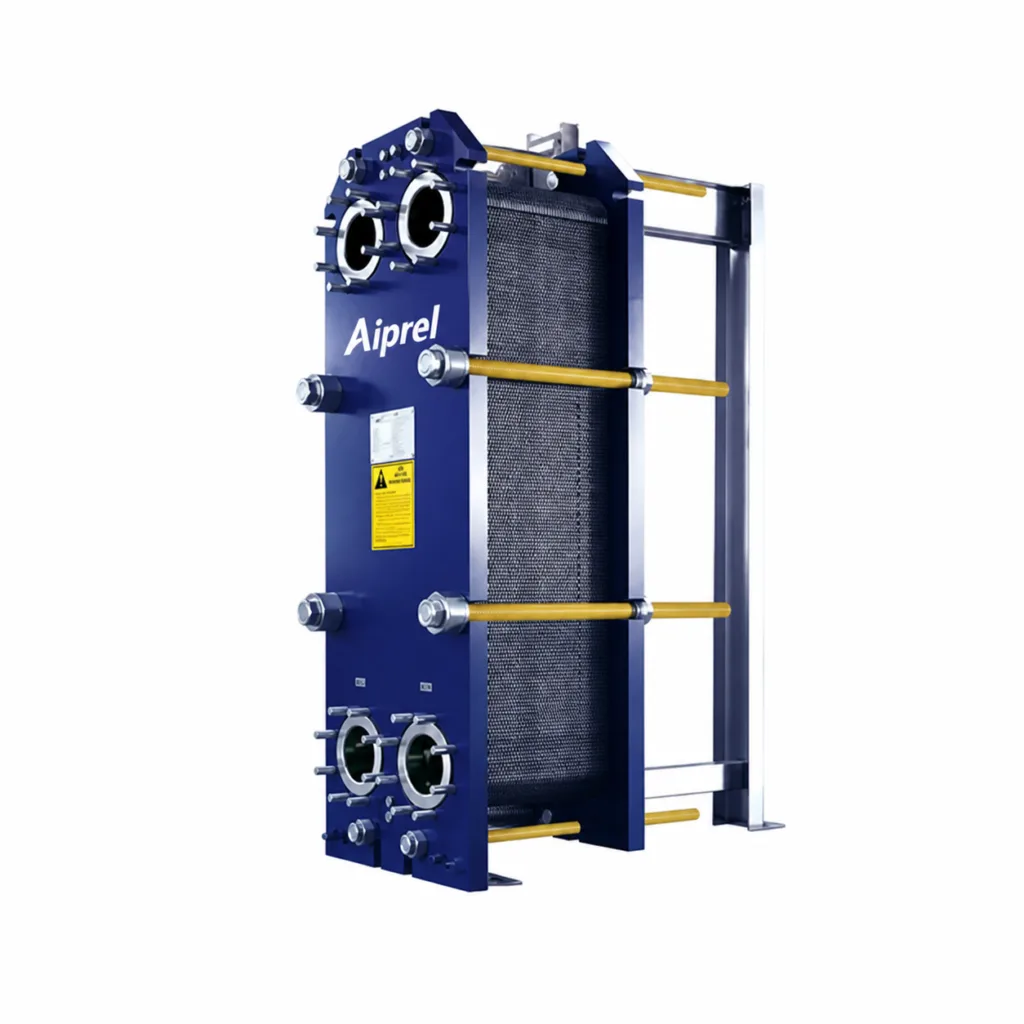
Gasketed Plate Heat Exchanger
Aiprel gasketed plate heat exchangers deliver efficient heat transfer, compact construction, flexible capacity and easy cleaning for industrial applications.
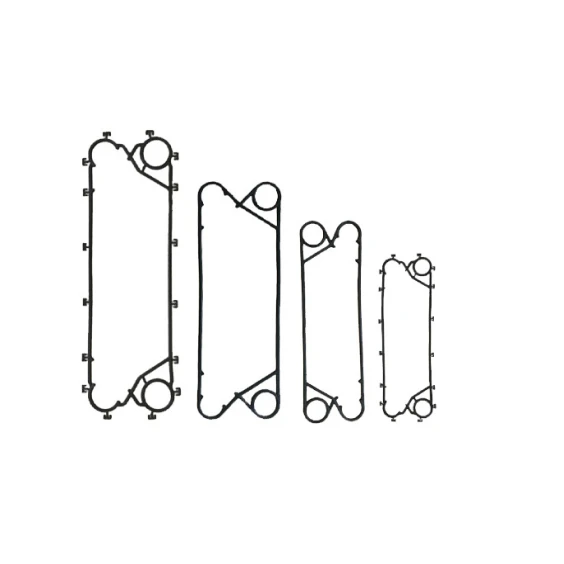
Heat Exchanger Gaskets
Aiprel plate heat exchanger gaskets provide reliable sealing and correct fluid distribution within gasketed plate-and-frame heat exchangers.