When to Replace Plates vs Replace the Whole Heat Exchanger
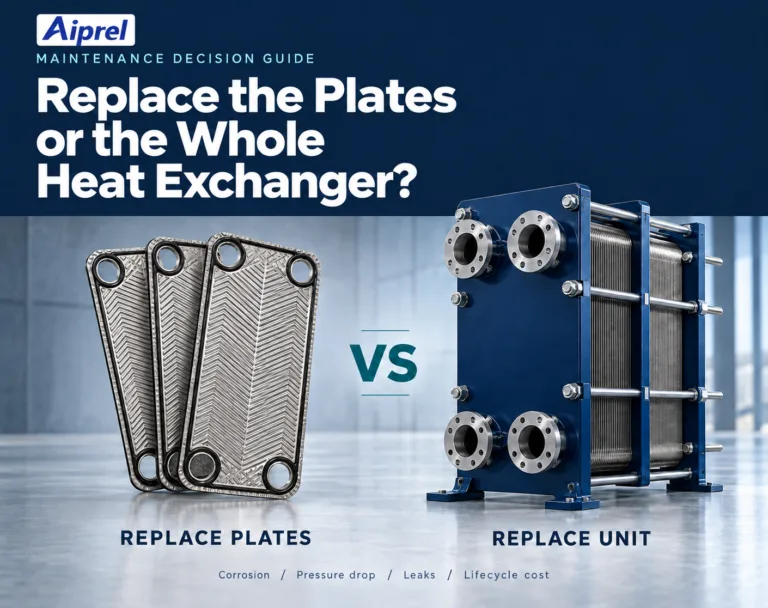
Compare plate corrosion, pressure drop, repeat leaks and remaining-life costs to decide whether to replace heat exchanger plates or the complete unit.

Compare plate corrosion, pressure drop, repeat leaks and remaining-life costs to decide whether to replace heat exchanger plates or the complete unit.
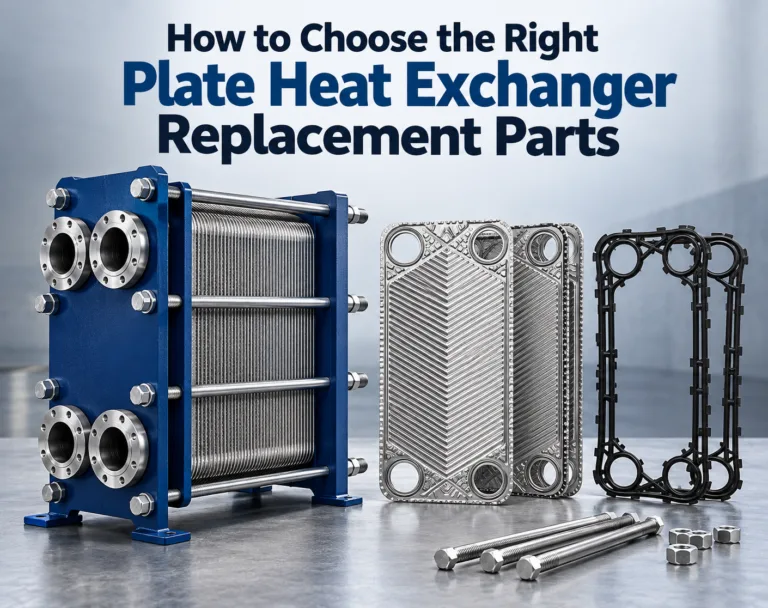
Learn how to identify replacement plates and gaskets, check dimensions and materials, and prepare the information needed for an accurate spare parts quotation.
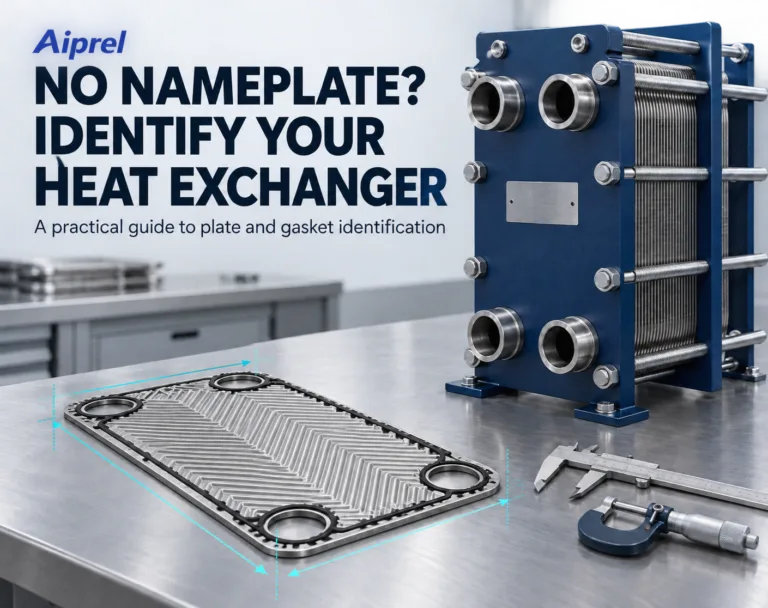
A gasketed plate heat exchanger that has lost its nameplate is not unidentified. It is undocumented. The metal still carries the answer — in four places on the unit, and in five dimensions you can take with a caliper, a…
We are proud to announce our successful recertification, demonstrating our ongoing commitment to international manufacturing standards.
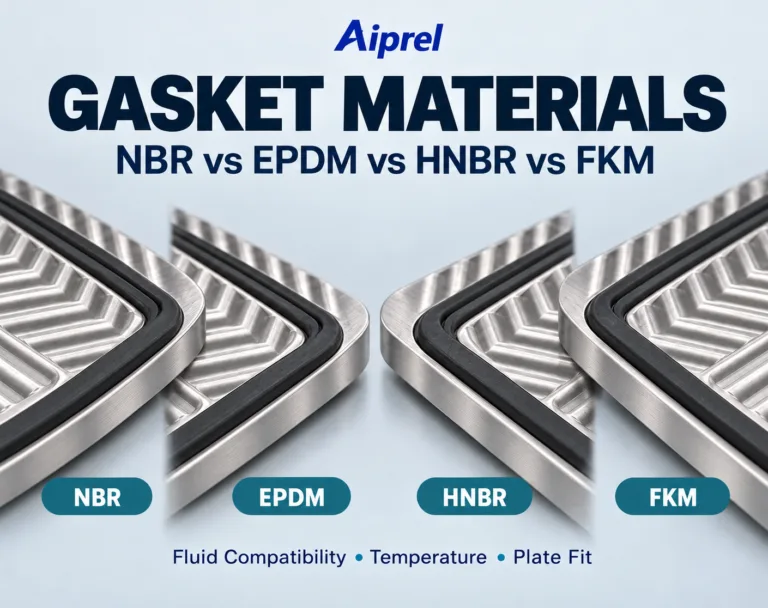
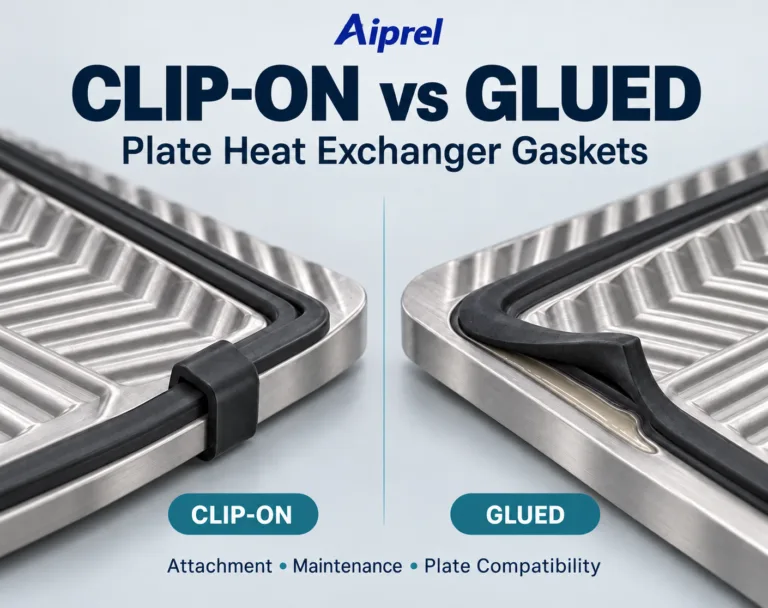
Compare NBR, EPDM, HNBR and FKM gaskets for plate heat exchangers. Learn how fluid compatibility, operating temperature, cleaning conditions and plate fit affect material selection, and what information to confirm before ordering replacement gaskets.
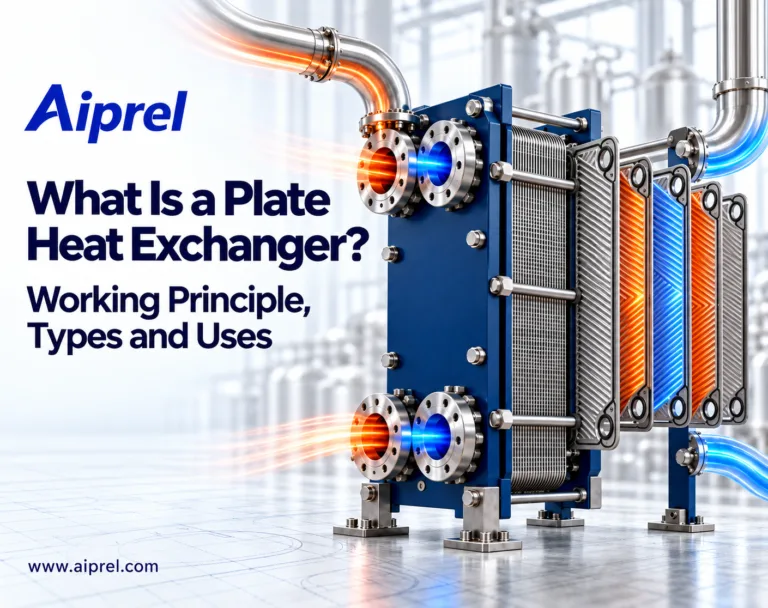
Plate heat exchangers transfer heat between fluids through thin metal plates. This article explains their working principle, main types, and common applications. Discover how gasketed, brazed, and welded designs differ, and learn which factors influence performance, maintenance, and selection for heating, cooling, and heat recovery systems with guidance from Aiprel.
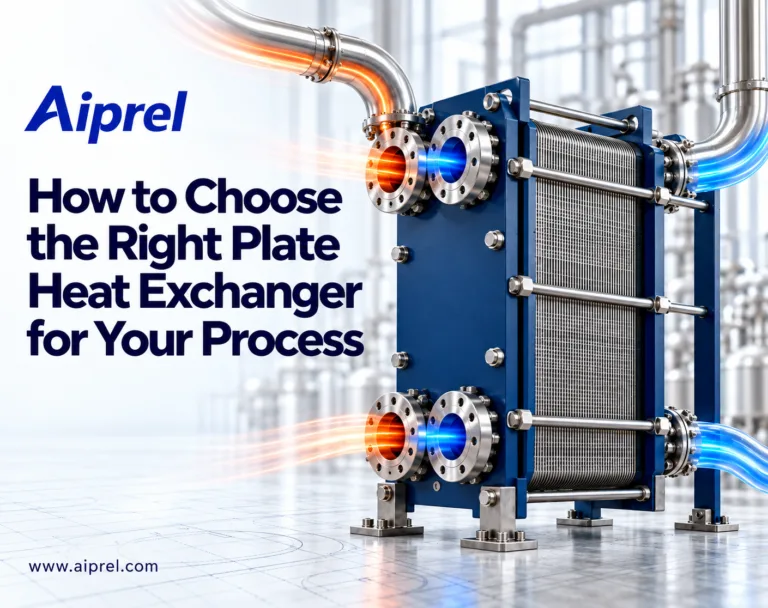
Choosing the right plate heat exchanger requires careful evaluation of process conditions, fluid properties, thermal duty, and maintenance needs. This guide explains how to compare exchanger types, select compatible materials, assess pressure drop, and prepare operating data to help Aiprel recommend a suitable solution for your heating or cooling process.
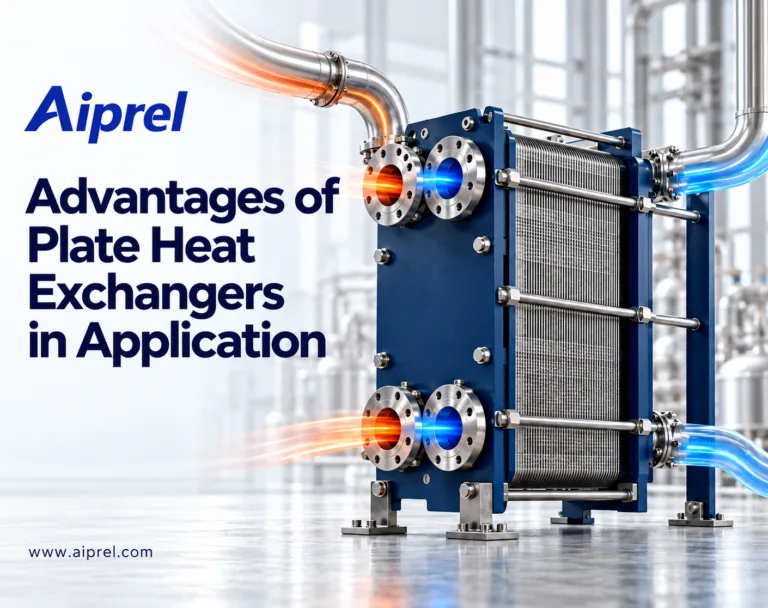
Plate heat exchangers deliver efficient heat transfer, compact installation, and flexible solutions for industrial applications. From HVAC and process cooling to heat recovery, they help optimize energy use. Gasketed designs also simplify maintenance. Discover key advantages, typical applications, and selection considerations for choosing the right plate heat exchanger with Aiprel.
Submit your requirements, and our engineers will address your questions in real-time.
Privacy Statement: We are committed to strictly protecting your privacy.